
What are livestream ads? A practical guide to setup, tracking and scaling
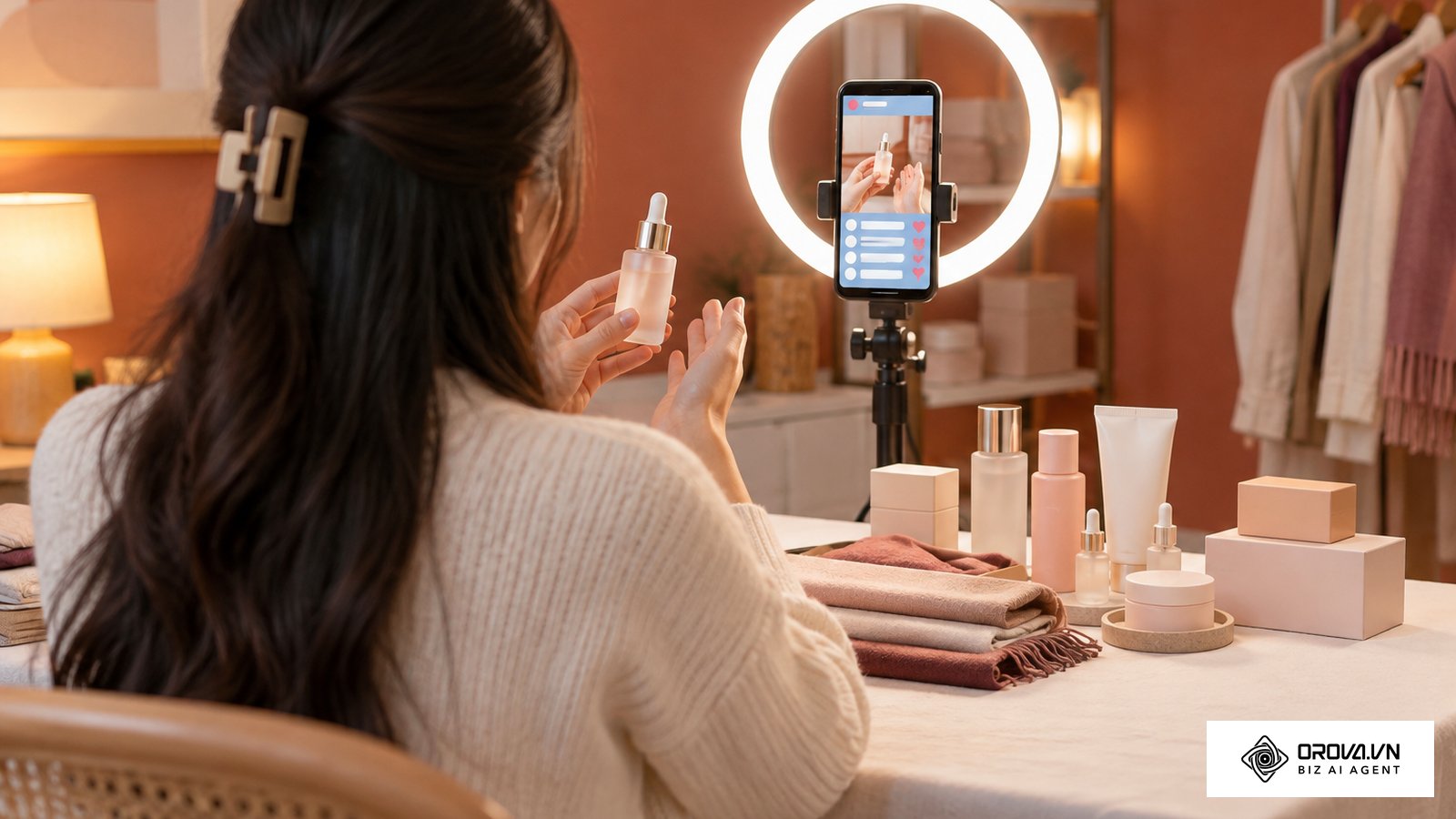
Livestream ads are paid placements that either push viewers into a live broadcast or run inside it, so people can watch, ask and buy while the stream is still on air. Picture this situation: you are running a live shopping event for your brand. You have a full live room, the host is doing a fantastic job showcasing the products, and the comments section is flooding with excited reactions. However, when the broadcast ends and you open your analytics dashboard, it shows almost no attributed sales, even though your warehouse team is busy packing new orders. This is the exact moment many marketers realize that traditional advertising frameworks fail completely during real-time events. You might think that simply boosting a live video stream will generate measurable returns, but without a dedicated technical architecture, you are essentially flying blind. Livestream ads require a fundamentally different approach to budget pacing, host coordination, and data tracking. This guide will dismantle the technical complexities of running these campaigns, show you how to fix broken attribution models, and provide actionable frameworks to scale your return on ad spend.
What are livestream ads?
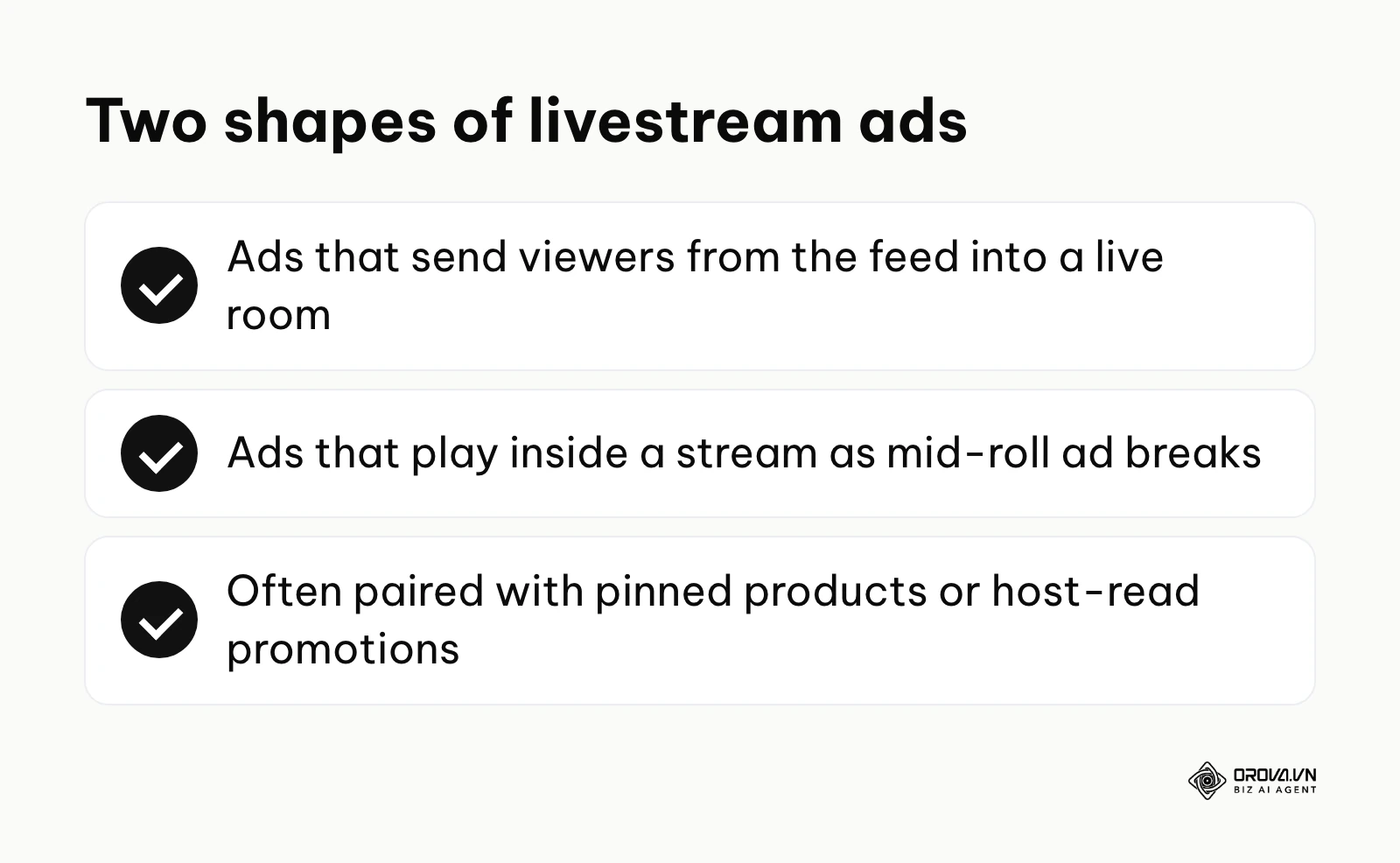
Livestream ads are promotional placements tied to real-time video broadcasts, allowing brands to capture viewer attention and drive immediate actions. In practice they come in two shapes: ads that send people from the feed into a live room, such as TikTok LIVE Shopping Ads or a boosted Facebook live video, and ads that play inside a stream, such as mid-roll ad breaks. Unlike static or pre-recorded video campaigns, they capitalize on live audience engagement, often paired with pinned products or host-read promotions.
The concept originated loosely from traditional television teleshopping networks but evolved into a highly targeted digital format when e-commerce platforms in Asia introduced interactive buying elements. Today, these ad units blend seamlessly into the user interface of major social networks, blurring the line between content consumption and digital storefronts.
To understand their unique position, it is helpful to contrast them with other common digital video formats that marketers frequently confuse them with.
| Concept | How it differs | Example |
|---|---|---|
| Livestream ads | Happens in real-time with immediate interactive elements like pinned product cards. | A clickable cosmetic product card appearing right as a TikTok creator applies the makeup live. |
| Pre-roll video ads | Plays passively before a pre-recorded video starts, often skippable. | A fifteen-second commercial running before a YouTube vlog begins. |
| Influencer shoutouts | Usually a static post or pre-recorded segment embedded in standard content. | An Instagram reel where an influencer mentions a discount code for a brand. |
Illustrative example: A mid-sized skincare brand launched a live tutorial on a social platform. The context was a product launch targeting young adults. Their initial step was to run standard video ads, but they noticed viewers were dropping off before finding the link in the bio. The hurdle was the friction in the buying journey. They switched to promoting the live room itself and pinned the serum on screen whenever the host mentioned it. The visible change was that buyers no longer had to hunt for a link: questions in the chat turned into clicks on the pinned product while the demo was still running.
The purpose and meaning of live advertising
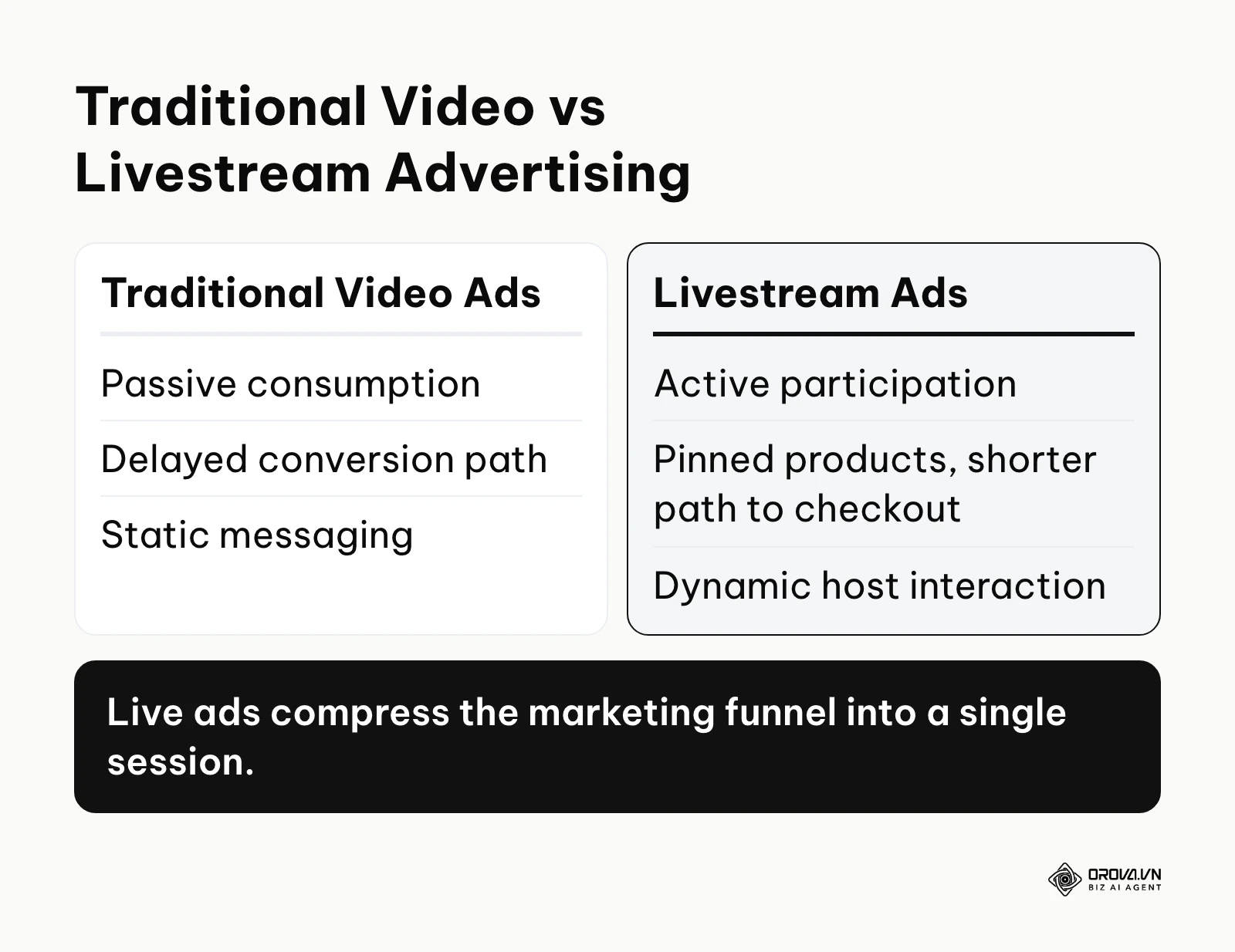
Livestream ads exist to solve a critical problem in modern digital marketing: the friction between product discovery and the final purchase. In a standard funnel, a potential customer sees an ad, clicks a link, waits for a landing page to load, browses the catalog, and eventually checks out. Every single step in that journey introduces a chance for the user to abandon the process. Live advertising compresses this entire funnel into a single, cohesive session. The user discovers the product, sees a real-time demonstration, asks questions in the chat, and clicks an overlay to buy without ever leaving the broadcast environment.
In the broader picture of an advertising strategy, these campaigns sit firmly at the bottom of the funnel. While you might use display networks to build broad awareness and search ads to capture high intent, livestream ads act as the ultimate conversion engine. They take an engaged audience and apply time-sensitive urgency to force a purchasing decision. Because viewers who stay in a live room are actively watching rather than scrolling past, it is a valuable space for direct-response marketing.
If you choose to ignore this format, you lose easy access to impulse buyers. You miss the opportunity to capitalize on the parasocial relationships viewers have with creators and hosts. More importantly, you lose the ability to clear excess inventory quickly through dynamic pricing and real-time flash sales, which are incredibly difficult to orchestrate with static campaigns.
When not to use livestream ads: You should avoid this format if your product requires a very long B2B procurement cycle with multiple stakeholders, as impulse buying is nonexistent in that space. It is also highly wasteful if you lack the inventory depth to handle a sudden surge in demand; running out of stock mid-stream damages brand trust and wastes ad spend. Finally, if you do not have a charismatic host, a reliable technical setup, or a dedicated team to moderate live comments, standard video campaigns remain a much safer and more cost-effective alternative.
Business values and direct benefits
Implementing a robust live advertising strategy provides distinct advantages that can be categorized into overarching business values and granular benefits for the operators managing the campaigns.
Accelerated Sales Velocity
For the business, the primary value is cash flow acceleration. Traditional campaigns often take weeks to optimize and generate a steady stream of revenue. Livestream ads, however, concentrate sales into a tight window of a few hours. This rapid turnover is crucial for consumer goods companies that need to liquidate seasonal stock quickly or fund subsequent marketing initiatives without waiting for a lengthy cash conversion cycle.
Reduced Cost Per Acquisition (CPA)
By capitalizing on heightened emotional engagement and immediate scarcity, businesses can see a lower cost per acquisition compared to standard retargeting efforts. The interactive nature of the broadcast builds trust faster than a static landing page, which heavily reduces the hesitation that typically causes cart abandonment.
Real-time Audience Feedback
For the operator or media buyer, the immediate feedback loop is invaluable. Instead of waiting days to see if an ad creative resonates, an operator can look at the live chat and viewer retention graphs. If viewers drop off when a certain product is pinned, the team can swap the pinned item and shift ad budget toward what is working. This level of agility is impossible with traditional asynchronous advertising.
To quantify these benefits, we can look at the typical metrics and timelines associated with successful implementations.
| Benefit | Measured by which metric | Time to see result |
|---|---|---|
| Accelerated sales velocity | Gross Merchandise Value (GMV) per hour | Immediately during the broadcast |
| Reduced acquisition costs | Cost Per Acquisition (CPA) | Within 24 hours of the stream ending |
| Enhanced engagement | Average Watch Time & Chat Velocity | Real-time during the event |
Illustrative example: A fashion retailer was struggling with a high CPA on their standard catalog ads. Their context was a team of three marketers trying to clear winter inventory in early spring. The steps they took involved shifting part of their budget from static carousels to a two-hour live shopping event, promoting discounted bundles. The hurdle occurred when viewers complained in the chat that the bundles were too expensive. The host switched to single, lower-priced items and the team pinned those instead. The visible result was a clear shift in momentum in the second half of the stream, and a CPA the team then compared against their catalog ads to decide whether to repeat the format.
OROVA ADS applies AI Agent to automate and optimize ad performance on Google, Meta and TikTok. Scale your budget safely, monitor 24/7 and expand your business quickly.
Experience the solution at orova.vn/ads
How livestream ads actually work
The mechanics of running ads during a live broadcast are significantly more complex than launching a standard campaign. It requires synchronizing video production, real-time inventory management, and instantaneous data routing. To master this, we must dissect the ecosystem into its core components.
The technical architecture of real-time distribution
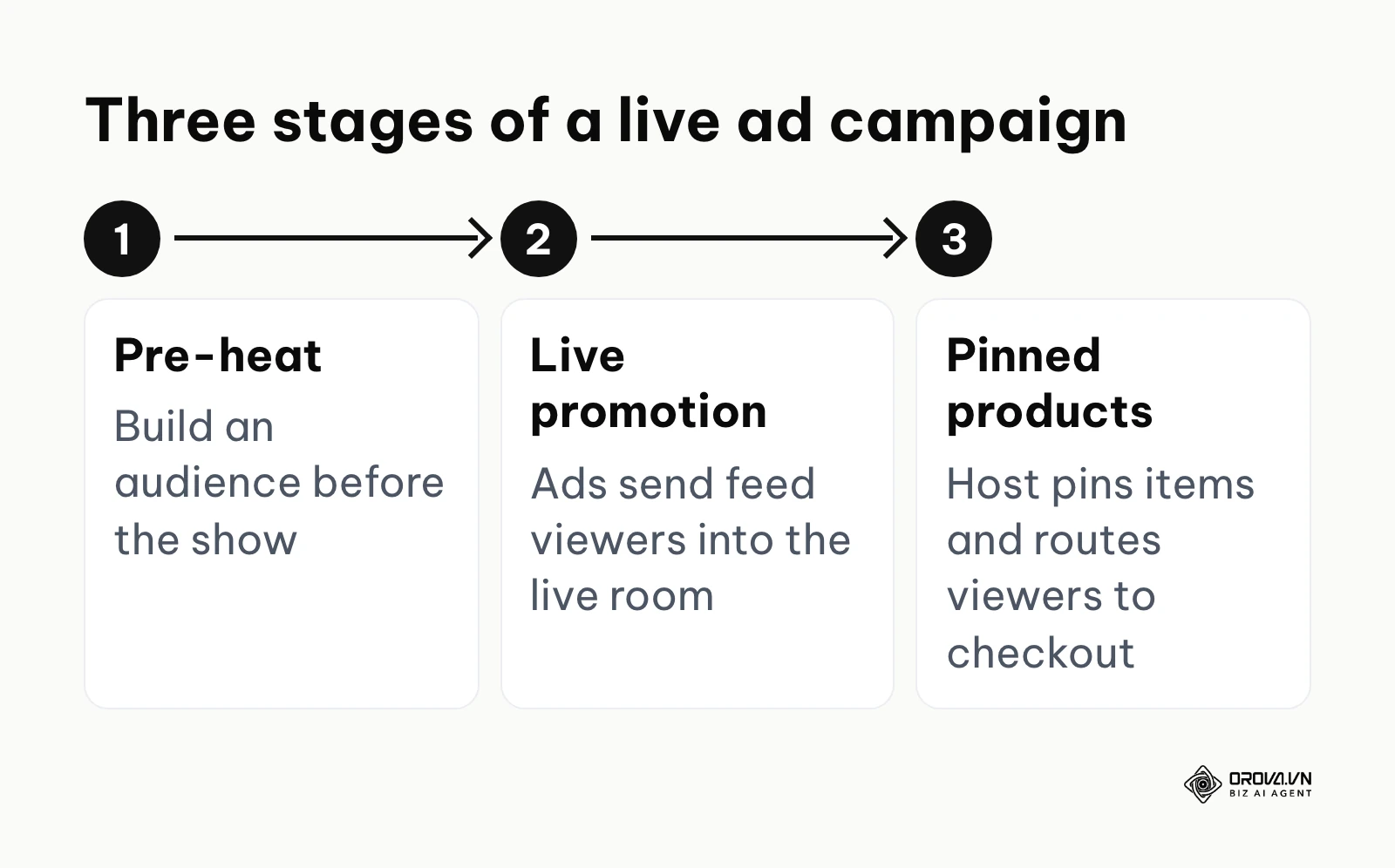
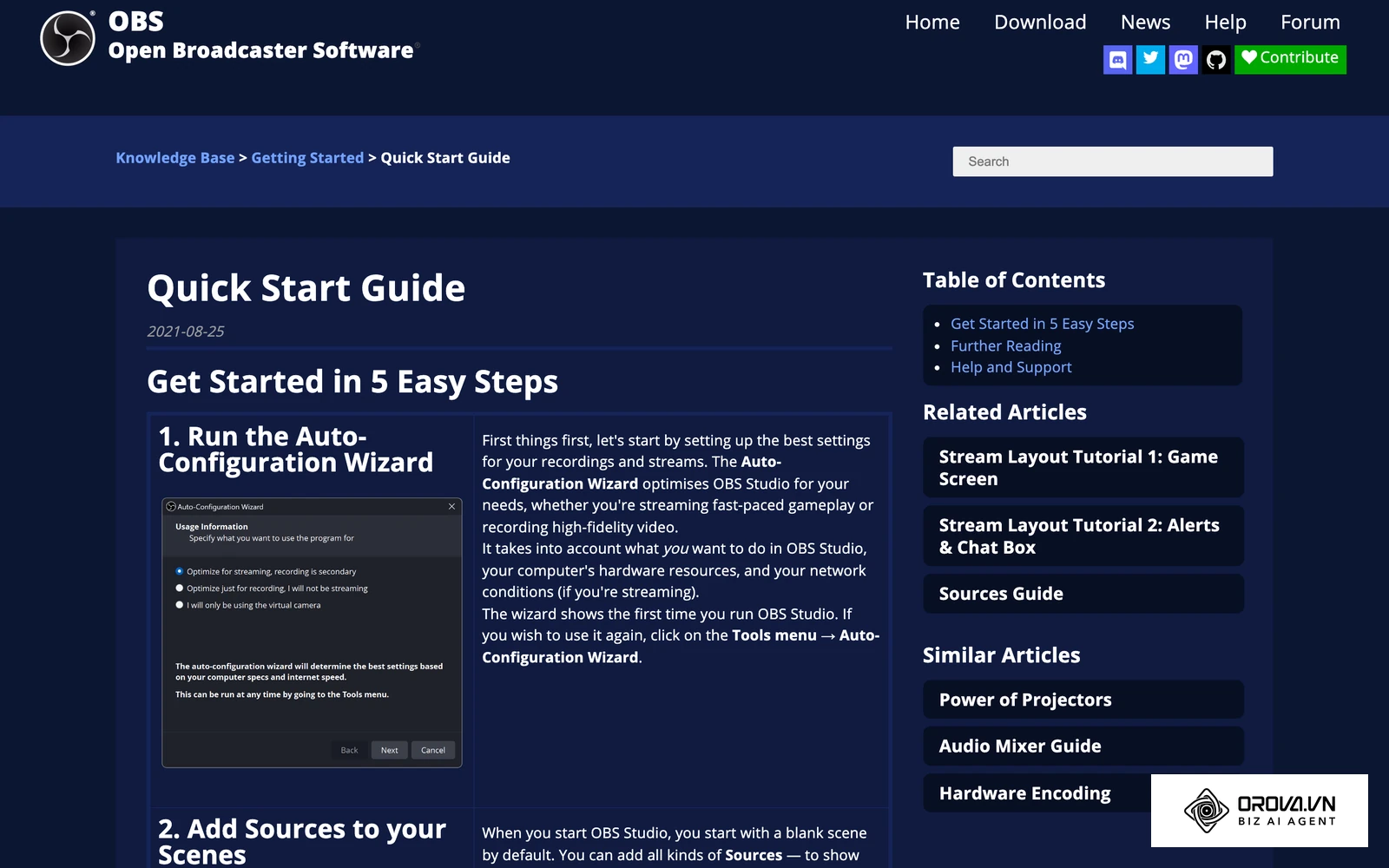
At its core, the broadcast and the ad are two separate pieces. The video reaches the platform either from the phone app or from streaming software that sends the feed with a stream key, usually over the Real-Time Messaging Protocol (RTMP). The ad is a paid placement created in the platform's ads tool: during a pre-heat phase it builds an audience before the show, and once you are on air it promotes the live room so that people scrolling their feed can tap straight into the broadcast. Inside the room, the host or a moderator pins products as they are shown, using the platform's live shopping tools where they are available, and the video keeps playing while the viewer opens the product. Treat these as three stages: pre-heat, live promotion, and pinned products that route viewers to checkout.
Platform mechanics: TikTok vs Meta vs Twitch
Not all platforms handle live inventory the same way, and understanding these nuances is critical for allocating your budget effectively.
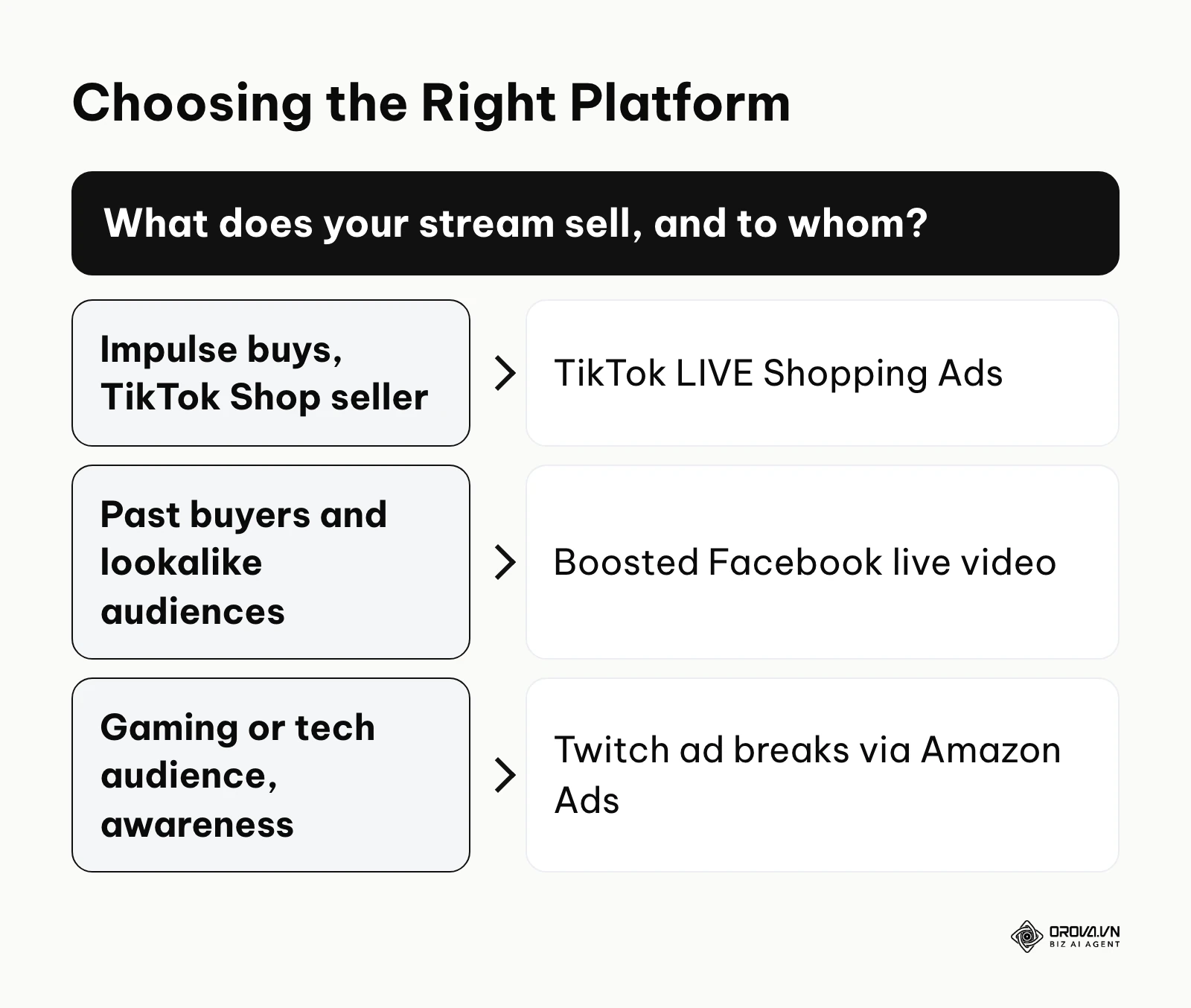
On TikTok LIVE, sellers who use TikTok Shop can run LIVE Shopping Ads in Ads Manager, which send viewers from the For You feed into the live room, and pin products during the stream so viewers can buy without leaving the app. Availability depends on the markets where TikTok Shop operates. The audience is quick to act on impulse, so the opening minutes of a stream matter. For the wider campaign structure around your lives, see this advanced TikTok ads guide; if you want TikTok to automate targeting for always-on sales between streams, compare it with a TikTok Smart Performance campaign. You can reference resources on TikTok ads cost to understand baseline expectations for minimum budgets on the platform.
Meta (Facebook and Instagram) operates differently. Facebook Pages can boost a live video, and Meta closed its dedicated Live Shopping feature on Facebook in 2022, so a live ad on Meta usually sends buyers to your website or a message thread to complete the order. Meta's delivery works well with past purchasers and lookalike audiences, and the Conversions API helps it match purchases back to the people who saw the ad. The same creative rules from Facebook video ads apply to the clip you boost. If you are struggling with broad audiences here, refining your approach with advanced Facebook ads targeting is a necessary step before going live.
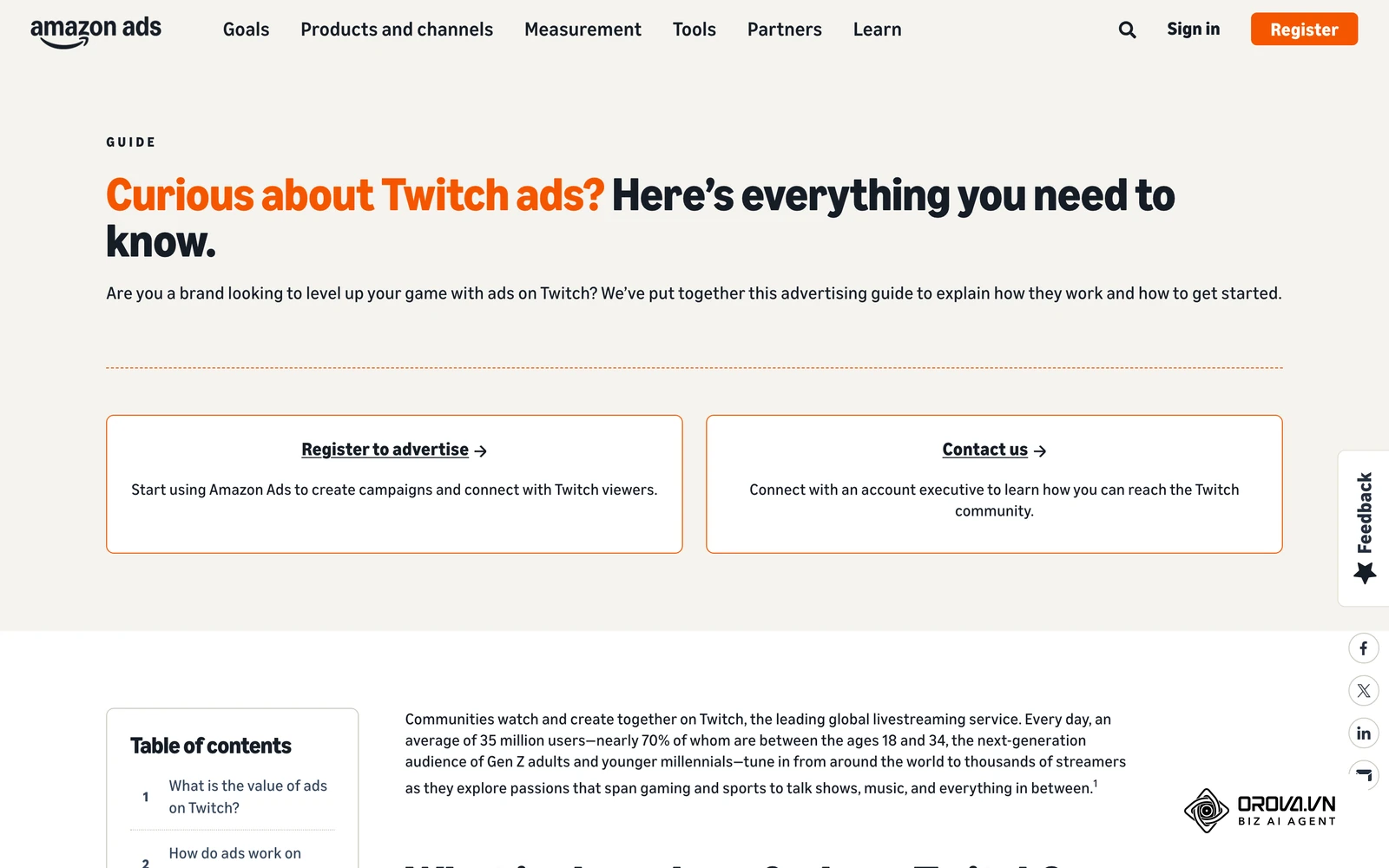
Twitch presents a different environment focused on long-form content, primarily gaming and tech. Advertisers buy Twitch inventory through Amazon Ads, and the ads usually play as video ad breaks during a stream rather than as clickable product pins, so it suits awareness and sponsorships more than instant checkout.
The attribution challenge and server-side solutions
The most frequent point of failure in live campaigns is tracking. When a user watches a stream on a mobile app, clicks an ad, and then opens a Safari browser to complete the purchase, standard tracking pixels often break due to cross-device limitations and privacy restrictions.
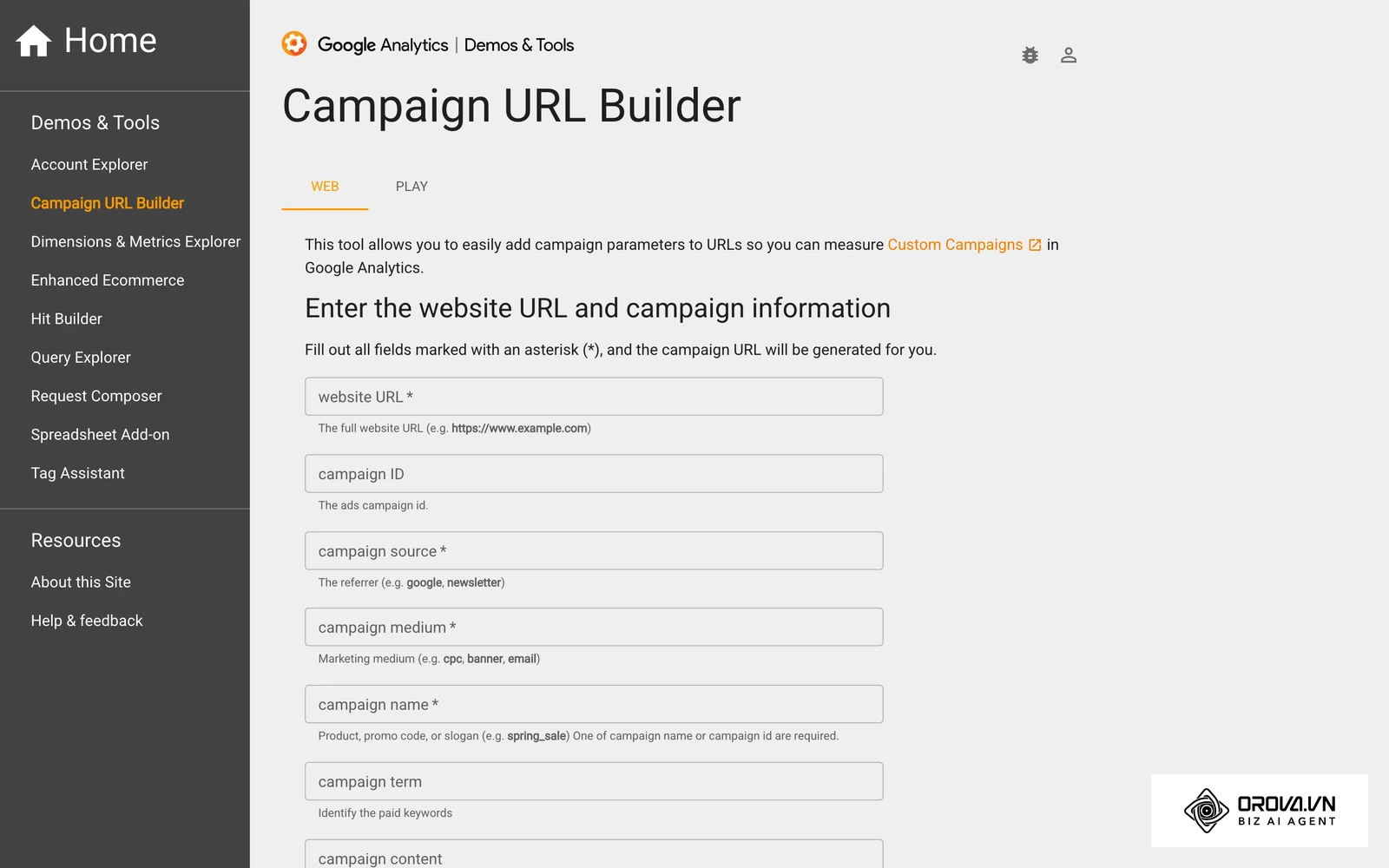
To solve this, you must implement server-side tracking. Relying solely on browser-based pixels during a live event means part of your sales will never be matched to the ad. By implementing a Conversions API (CAPI), your web server communicates directly with the ad platform's server. When a purchase occurs, your backend sends the transaction data, with customer details hashed, directly to the platform, matching the sale to the user who clicked the live ad moments earlier.
Additionally, you should utilize specific UTM parameters tailored for the event, such as utm_source=tiktok_live and utm_campaign=summer_sale_live. If your data is still fragmenting, you might need to review your overall Facebook ads reporting setup to diagnose where the signal is dropping.
Scripting the transition: Host and ad coordination
Many campaigns fail because the host does not know how to create a natural "break" for the ad to appear. A highly effective script follows four distinct phases to coordinate with the operator pushing the ad.
- The Tease: The host mentions a special offer coming up but does not reveal the product, keeping viewers hooked.
- The Demonstration: The host uses the product naturally, addressing common pain points.
- The Ad Drop: The host explicitly states, "I see many of you asking about the price. We have an exclusive live-only offer happening right now." At this exact moment, the operator triggers the ad.
- The Urgency: The host emphasizes that the pinned deal expires when the broadcast ends.
Because formats vary widely based on the platform and objective, marketers generally choose from several distinct types of live ads.
| Type of Live Ad | Characteristics | Best suited for |
|---|---|---|
| In-stream Product Overlays | Clickable cards that appear at the bottom of the screen without stopping the video. | Fast-moving consumer goods and low AOV impulse buys. |
| Mid-roll Video Insertions | Short video ads that play during an ad break in the broadcast. | Brand awareness campaigns and high-production value commercials. |
| Co-hosted Sponsored Streams | A brand representative joins an influencer's live broadcast to pitch directly. | Deep product demonstrations and high-ticket items requiring trust. |
Illustrative example: An electronics retailer was struggling to measure the impact of their weekly tech review streams. The context involved a two-person marketing team managing campaigns across multiple platforms. Their initial steps included boosting the live video and relying on a standard browser pixel to track sales. The hurdle was massive data loss; users were watching on their phones but buying on their laptops later that evening, so the reported ROAS looked close to zero. To fix this, the team implemented a Conversions API and began issuing a unique promo code (TECHLIVE20) only mentioned verbally during the broadcast. The visible result was a turnaround in reporting: laptop sales that had looked unrelated could now be traced back to the live event through server-side matching and promo code redemptions.
How to start and adapt your strategy
Transitioning to live advertising requires different approaches depending on your scale and resources. The tactics that work for a global enterprise will quickly bankrupt a small operation.
Small business owners: Testing the waters
If you are managing a tight budget, your primary goal is to prove the concept without overcommitting. You do not need a professional studio; authenticity often converts better than high production value.
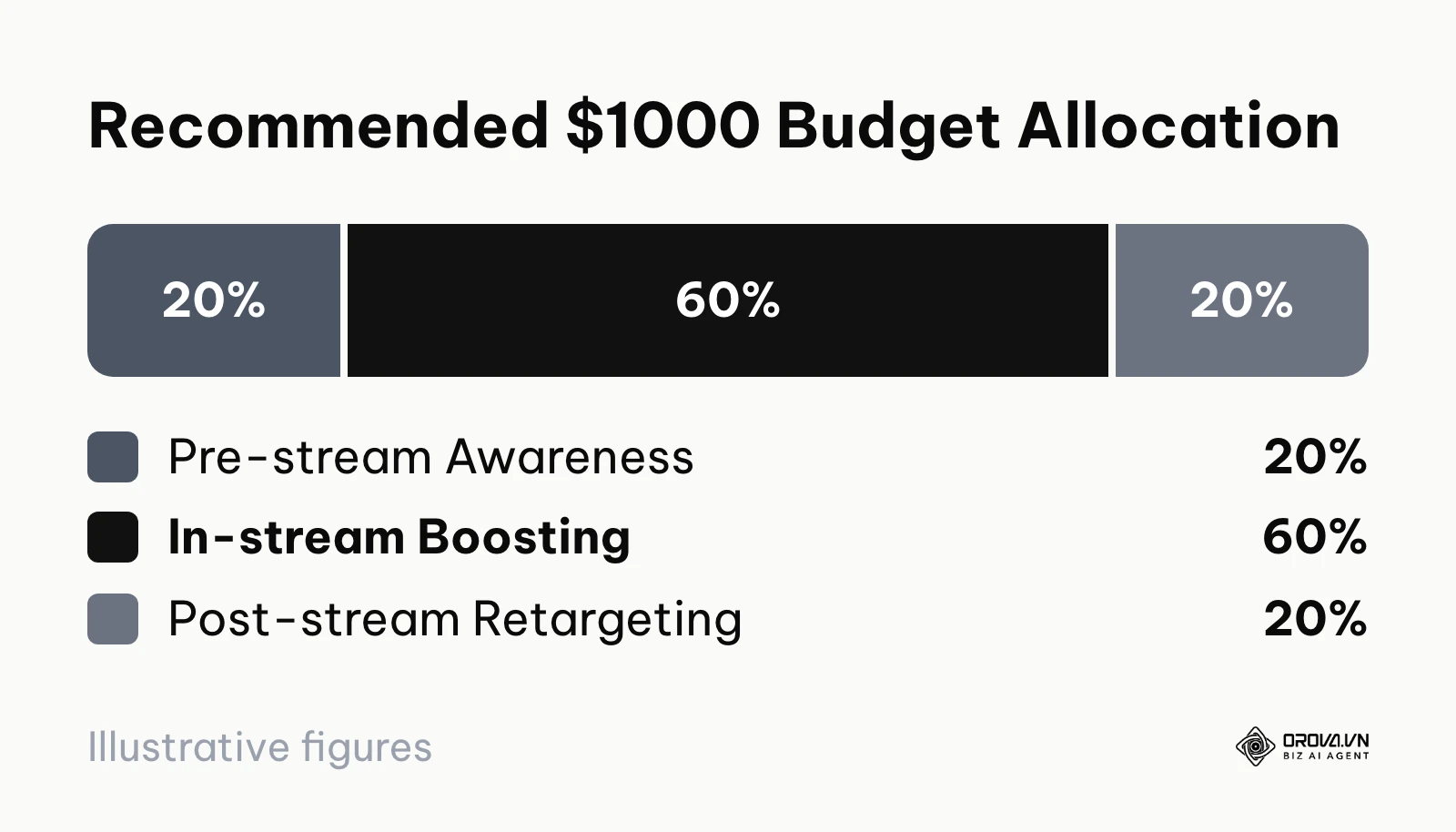
- Allocate a specific, capped budget for your first test, ideally around one thousand dollars. You can read more about structured ads budget allocation to ensure you don't overspend on the pre-heat phase.
- Spend twenty percent of your budget in the days leading up to the event to build an audience list of interested viewers.
- Dedicate sixty percent of the budget to in-stream boosting, targeting only users who have interacted with your brand recently.
- Reserve the final twenty percent for post-stream retargeting, capturing those who added items to their cart during the live but failed to check out. Short clips cut from the stream can serve as creatives here, in the same spirit as user-generated content ads.
In-house marketers: Building the infrastructure
For established teams, the focus shifts to data integrity and workflow automation. You need to ensure that a sudden spike in live sales does not crash your fulfillment pipeline.
- Audit your tracking setup to ensure server-side APIs are functioning correctly across all active platforms.
- Synchronize your inventory management system with your ad platforms so that out-of-stock items are taken out of the pinned products and ads quickly.
- Develop a standardized brief for your hosts, including precise timestamps for when ad overlays will be triggered.
- Consolidate your reporting dashboards. If you are running pre-heat ads on search, you might need to evaluate your Google Ads management tools to ensure you are attributing cross-channel touchpoints accurately.
Agencies and freelancers: Scaling client operations
When managing live campaigns for multiple clients, standardization is your best defense against chaos. Live events are unpredictable, and having standard operating procedures (SOPs) prevents costly errors.
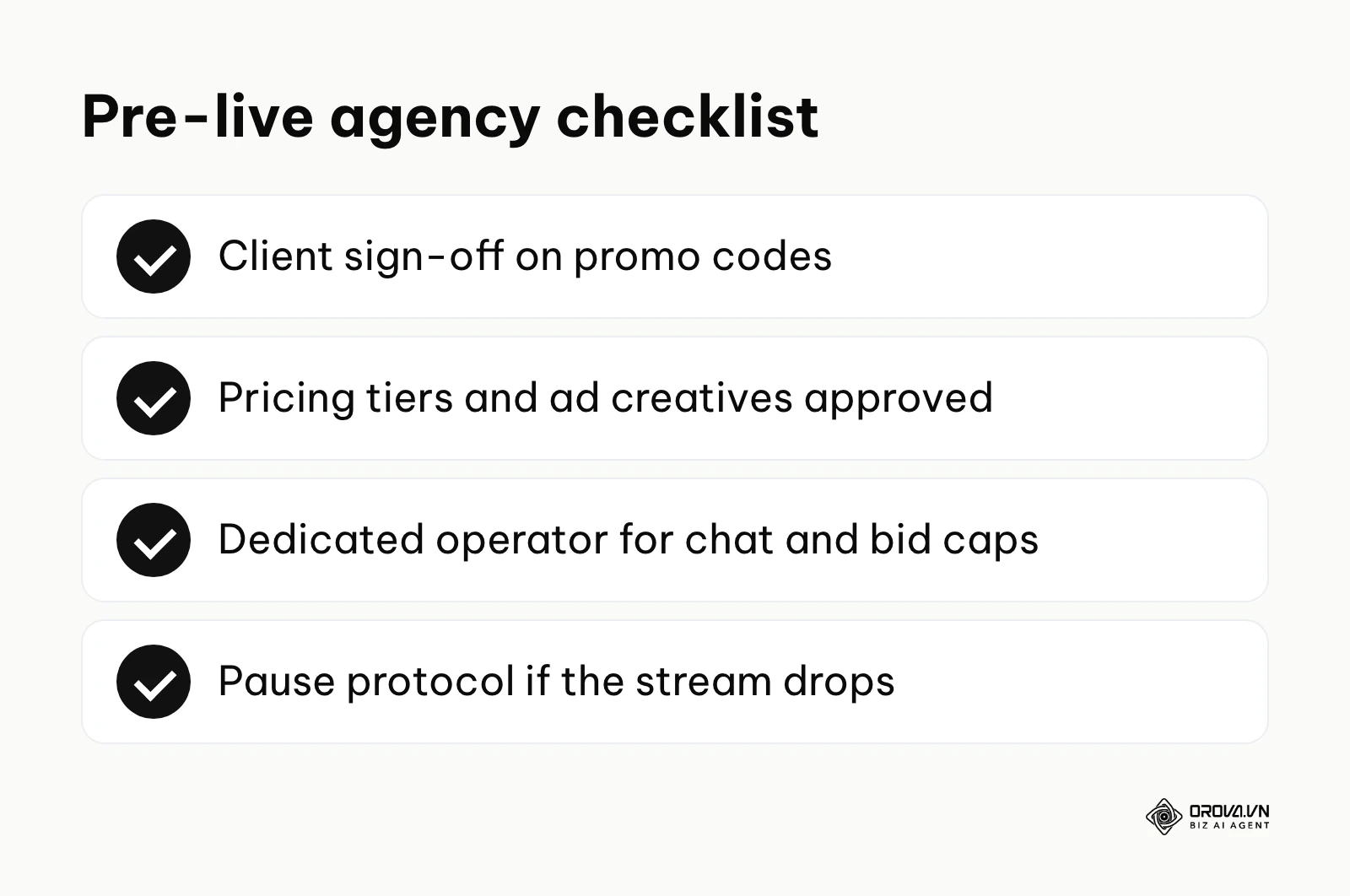
- Create a mandatory pre-live checklist that requires client sign-off on all promo codes, pricing tiers, and ad creatives.
- Assign a dedicated operator to monitor the chat and bid caps during the broadcast; the host cannot manage the auction dynamics while speaking.
- Establish clear protocols for pausing the ad spend immediately if the stream drops or the host encounters technical difficulties.
Regardless of your role, the pressure of real-time execution often leads to easily preventable errors.
| Common mistake | Consequence | How to avoid |
|---|---|---|
| Launching without testing the deep links. | Users click the ad but land on a broken page, wasting the entire budget. | Conduct a private test stream to click every pinned product card before going public. |
| Ignoring the warm-up phase. | Starting the aggressive sales pitch before the audience has peaked, leading to weak conversions. | Spend the first fifteen minutes engaging casually and building viewer count before dropping the first ad. |
| Failing to set bid caps. | The algorithm spends your entire daily budget in ten minutes during a viewer spike. | Always utilize cost controls or manual bidding strategies specifically designed for short-term events. |
Want to scale your budget but afraid of breaking performance? 📉
Integrate OROVA ADS now - an AI Agent that automatically monitors and optimizes Google, Meta, TikTok ads 24/7. Now, expanding and replicating your Performance Ads team is just one click away.
🚀 Try it now at: orova.vn/ads
Trends in the next few years: Author's perspective
As we look beyond the current landscape, the mechanics of live advertising are poised for radical transformation. Based on the technical shifts and consumer behaviors I am observing, I see several possible directions.
AI-driven dynamic ad insertions
Currently, an operator manually triggers a product overlay when the host mentions it. I believe this manual coordination will gradually shrink. Computer vision and speech recognition are already common in consumer apps, and I can imagine AI models that listen to the host's speech and visually recognize the product being held, suggesting the matching product pin for the operator to confirm. This could reduce the awkward timing gaps and allow hosts to speak fluidly without worrying about the operator's speed. To prepare, marketers should focus on building highly organized, machine-readable product catalogs now, ensuring every SKU has comprehensive metadata that an AI can easily query.
The shift towards decentralized live commerce
As of 2026, major social networks still hold a tight monopoly on live advertising infrastructure. However, I am noticing a growing frustration among brands regarding high platform fees and restrictive data policies. I lean toward a future where some brands pull live shopping experiences back onto their own domains. Using white-label streaming technology, brands could host the broadcasts on their own websites while using ad networks purely as traffic drivers. This shift would allow businesses to own the first-party data completely and bypass the attribution loss caused by cross-app tracking restrictions. If this happens, your ability to build a seamless on-site video player will become a major competitive advantage.
Predictive inventory synchronization
One of the biggest hurdles today is inventory latency; an item sells out in the warehouse, but the ad continues to run on the stream for another minute, frustrating buyers. I expect live commerce tools to move toward predictive inventory checks. Instead of just looking at current stock, a system could watch the velocity of sales in real-time and pause the ad before the item sells out, reserving the last few units to prevent overselling errors. However, this prediction assumes that supply chain software integrations will become significantly faster; if API latency remains high, this trend may stall.
Frequently asked questions
Are livestream ads still needed when we have AI product recommendations?
Yes. While AI is good at suggesting products based on past behavior, it lacks the ability to manufacture sudden, emotional urgency. AI recommendations are generally passive, whereas a live ad creates an event-driven scarcity that compels an immediate transaction, something static algorithms struggle to replicate.
How do you calculate the true ROI of a live campaign?
You must calculate the blended return. Do not look solely at the direct clicks from the live session. You must combine the in-stream revenue with the delayed conversions captured by your server-side tracking over the following forty-eight hours, and subtract both the media spend and the production costs (including host fees and studio time).
Should I bid based on CPM or CPA during a live event?
If your primary goal is maximizing viewer count for a major product launch, a CPM (Cost Per Mille) bid strategy is often necessary to aggressively win the auction. However, if your stream is purely focused on liquidating stock and you have a strict profit margin, utilizing a CPA (Cost Per Action) target will protect your budget from being wasted on window shoppers.
What is the minimum audience size needed to start?
There is no hard minimum, but a nearly empty live room lacks social proof in the chat, which makes paid traffic harder to convert. Focus your initial budget on building a pre-event audience list so that when you go live, you have a baseline crowd to interact with the ad drops.
How does cross-device tracking work for live ads?
It relies on matching. The platform knows which logged-in account clicked or watched the ad. When that person later buys on another device, your server sends the order through the Conversions API with hashed details such as email or phone number, and the platform matches it to the account. An exclusive promo code tied to the stream gives you a second, independent way to connect the sale to the live event.
Where to start?
Knowing the mechanics is one thing, but deploying your first campaign requires a strategic entry point based on your current infrastructure. Avoid trying to build a massive, multi-platform studio setup on day one. Instead, evaluate your current situation.
If you have never run a live ad before and are starting from scratch, your first step is to focus entirely on the host script and audience building. Do not worry about advanced APIs yet. Schedule a simple thirty-minute broadcast on a single platform, spend a small budget to boost the stream, and practice the manual transition of dropping a product link exactly when the host mentions the price. Mastering this timing is the foundation of everything else.
If you already have a fragmented setup where you stream occasionally but use different, disconnected tools for tracking, your immediate priority is data consolidation. Take one afternoon to map out exactly where your traffic goes after clicking a live ad. You must implement a reliable Conversions API integration between your e-commerce backend and your primary social platform before you spend another dollar on ad boosting.
If you are already running live campaigns frequently but failing to measure the true return, your next move is to mandate the use of stream-exclusive promo codes. By generating a discount code that is only ever mentioned verbally during the broadcast and never printed anywhere else, you create a fail-safe attribution method. This single step will immediately illuminate how many of your delayed, untracked sales are actually originating from your live advertising efforts.
About the author

Builder of Orova
Nguyễn Đỗ Trọng Ân has 8 years of experience in marketing, including 6 years managing market development across Asia. He builds Orova, a Biz AI Agent that never sleeps: it plans, runs and optimizes work for businesses.
Run your business with AI Agents
Orova is the always-on Biz AI Agent — it plans, runs, and optimizes the work for you.
Save time, unlock productivity.